Steyning, BN44
Windows for Steyning houses: flush casements and sashes for the old cottages, aluminium for the newer homes
If you own a house in Steyning and the windows are going, this page is the letter we would want to receive before spending any money.
Start with where your house is. The old town, from Church Street down the High Street to Charlton Street and Jarvis Lane, is a conservation area run by Horsham District Council. The South Downs National Park begins at the edge of town, so Steyning's streets are not inside it, even though the Downs fill the view from most of them. That matters, because it tells you who to ask and what rules apply.
Inside the conservation area, an ordinary house that is not listed and not a flat can usually have its windows replaced without a planning application, provided the new ones look like the old. We have not found an Article 4 direction that takes that right away in Steyning, and the council's 2018 appraisal of the town does not mention one. A listed house is different: any change to its windows needs listed building consent. The planning page sets out each case.
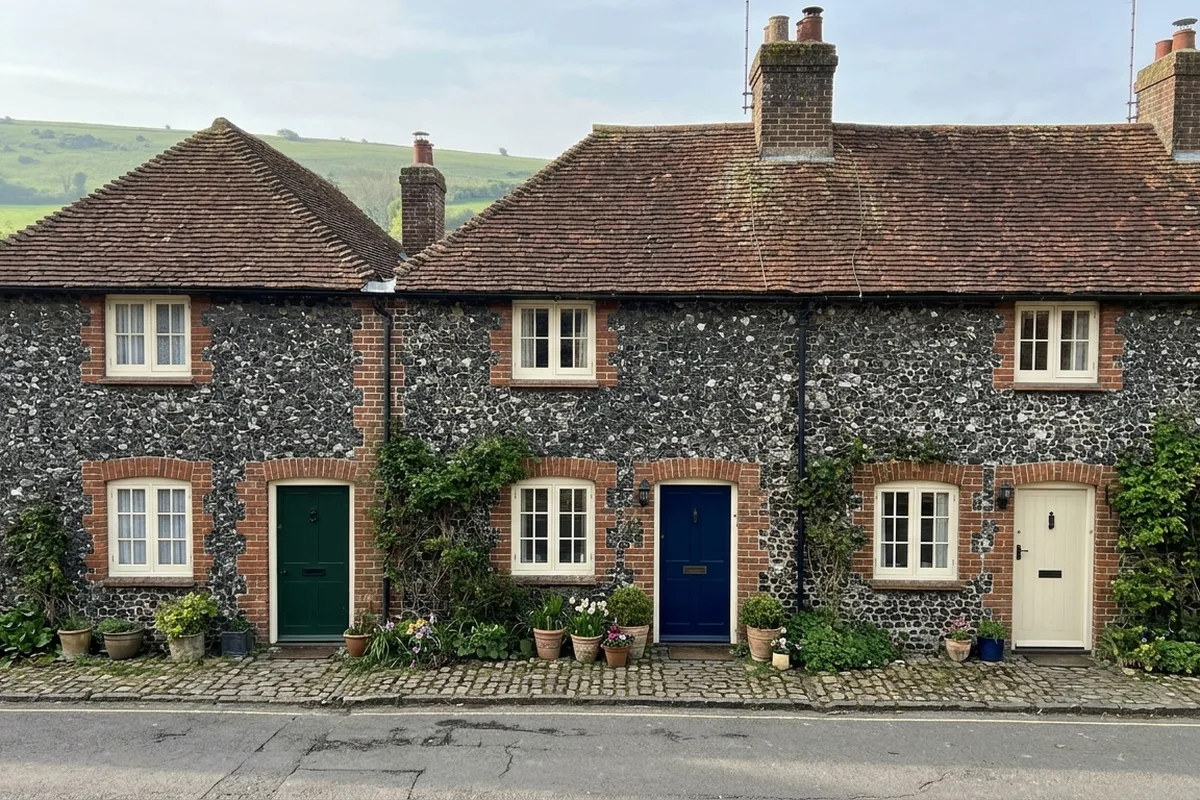
What the old town is built of
Steyning is flint, red brick and oak. Many of the oldest houses on Church Street and the High Street are medieval timber frames that were later given brick or flint fronts, and plenty still carry Horsham stone slab roofs. Tile-hanging appears on upper floors. The windows that suit them are, for the most part, small-paned casements, with sashes on the bigger Georgian and Victorian fronts.
Some older cottages here have horizontally sliding sashes; these are replaced with flush casements or vertical sashes that keep the same pane pattern.
What we suggest, house by house
- Flint or brick cottage, not listed: flush casements, which sit level with the frame like a timber window does. uPVC flush is the usual choice and costs roughly half what timber does.
- Victorian villa with sashes: vertical sliding sashes, uPVC first, in a cream or woodgrain finish that reads as painted wood from the pavement.
- Listed house: repair first, then timber to match, because consent will expect it.
- Later house on the outskirts, or a bungalow: slim aluminium casements, which suit plain brick and give more glass.
Every job is surveyed and quoted in writing by a FENSA-registered installer working in its own name. Here is exactly what happens to your enquiry.
Costs, shown as whole jobs
We do not publish price lists. Windows are bought a house at a time, so the what it costs page works through seven illustrative jobs on Steyning-type houses, from three casements at the back of a flint cottage to a whole 1970s house in aluminium, with the same cottage priced in uPVC and in timber so you can see the gap.
The villages around the town
The rules change within a mile or two. Bramber village sits outside the National Park while most of its parish is inside it. Findon is wholly inside, and its applications go to the National Park Authority. Henfield is outside, with its own conservation area. Each village page says which is which.
If you would rather talk, call 01903 948046, or send your details.
Steyning Windows