Replacement windows in Henfield, from the High Street to the newer estates
Henfield is the largest place we cover after Steyning, a long village on the A281 north of the Downs, and it is outside the South Downs National Park.
Horsham District Council adopted a conservation area appraisal for Henfield in 2018. It counts 60 listed buildings, three of them Grade II*, across five character areas: Church Street, the High Street, Tanyard, the Common and Nep Town. The older houses are timber framed with plaster or brick infill, many refaced in render, stucco, tile-hanging or mathematical tiles, and a few are slate-hung or weatherboarded. Windows are mostly timber casements and sashes, with some horizontal sliding sashes and leaded lights.
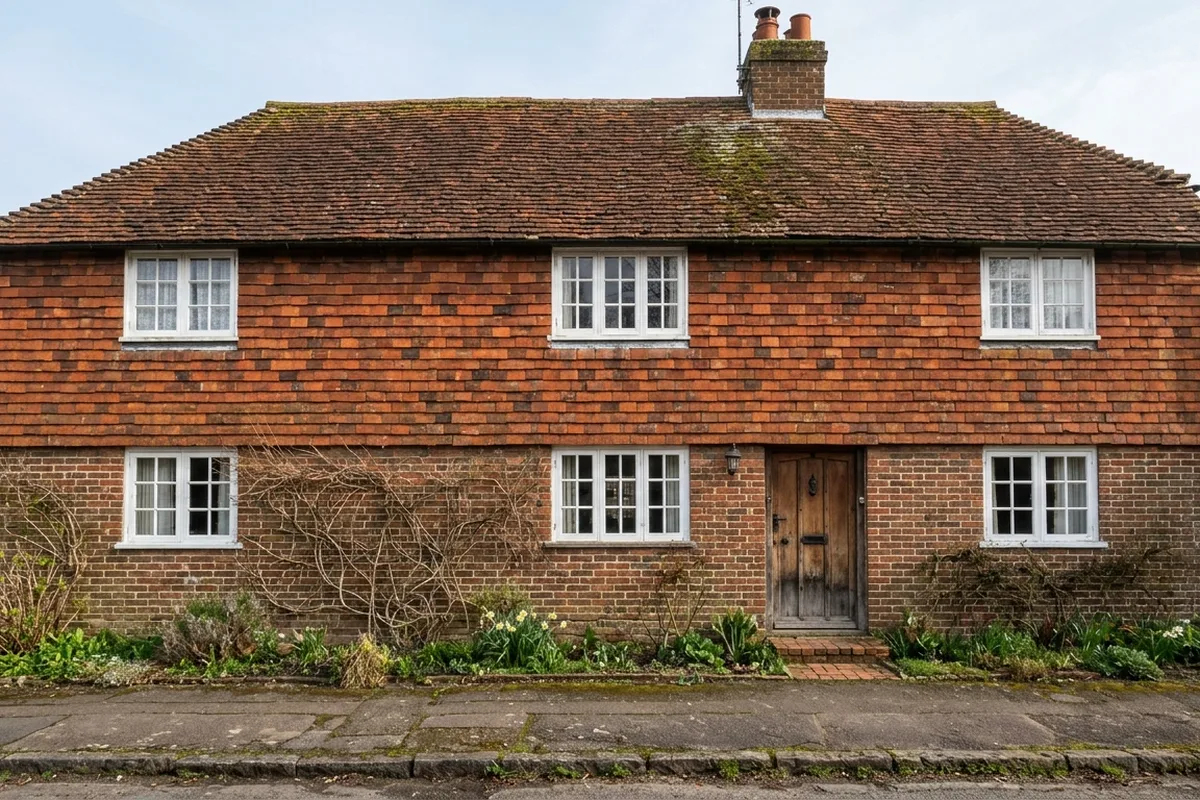
The same appraisal is blunt about replacements. It notes that many nineteenth and early twentieth century sashes have been swapped for uPVC double-glazed substitutes, and cites Southview Terrace, where nearly all the original glazing has gone. If you live in the conservation area and want uPVC, match the old pattern closely: sliding sashes where there were sashes, flush casements where there were casements.
The newer parts of the village
The parish design statement traces Henfield's growth: Victorian villas on Upper Station Road after the railway came in 1861, 1920s council houses on Hollands Road, the post-war Wantley Hill estate, the Parsonage area in the 1970s, Deer Park from the late 1990s, and the large Bishops Park and Manor Way developments of 2016 to 2018. Those later houses suit aluminium or plain uPVC, with no need to copy a period pattern.
Planning
Henfield is outside the National Park, so Horsham District Council is the planning authority. We have not found an Article 4 direction for windows in the village, and the 2018 appraisal does not mention one; check with the council if your house is listed or you are unsure.
For a Henfield survey, call 01903 948046, or send your details.
Background: Henfield on Wikipedia.